SaSS
UI Modernization
Usability Testing
Design System
Fewer clicks. Maximum impact.

ABOUT THE PROJECT
Generac's Dealer 360 platform was losing users to friction, unclear workflows, and a UI that hadn't kept pace with the business.
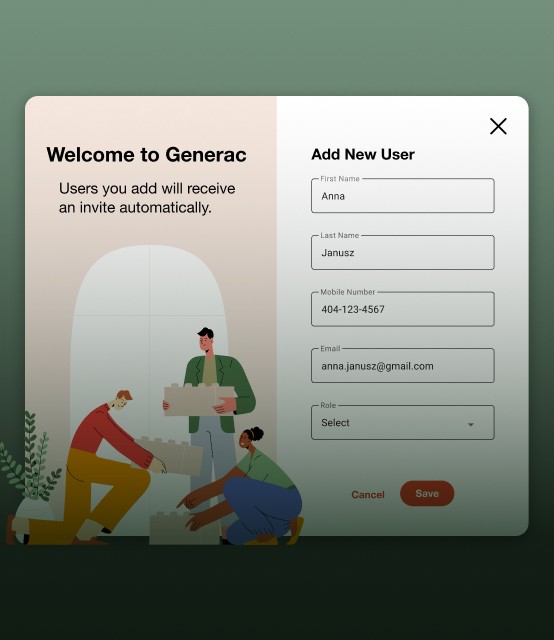
I led a full UI modernization of the 360 system, rebuilding the information architecture, a scalable design system, and redesigning key flows to reduce drop-off and drive adoption across a tiered dealer network.

CHALLENGES
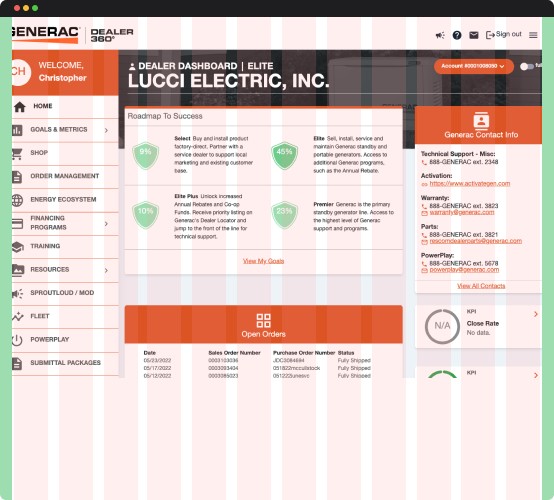
Generac Dealer 360 had grown organically over time, features were added without a coherent system, the IA reflected internal org structure rather than dealer workflows, and the visual language was inconsistent.
The result: dealers were abandoning key tasks mid-flow, support tickets were climbing, and adoption of high-value features were far below potential.



PROCESS
Every improvement had to rely entirely on structure, hierarchy, and flow to create a frictionless experience within a fixed backend.
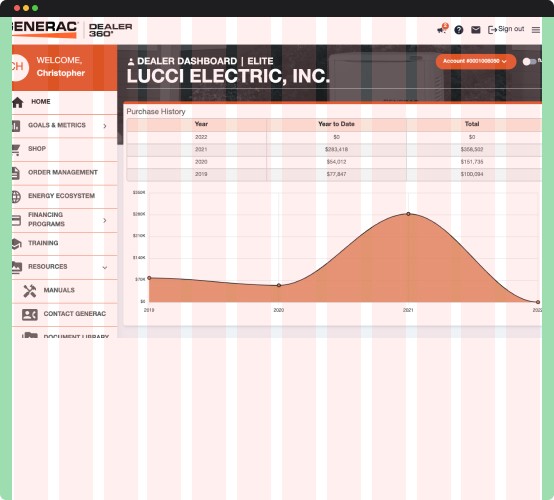
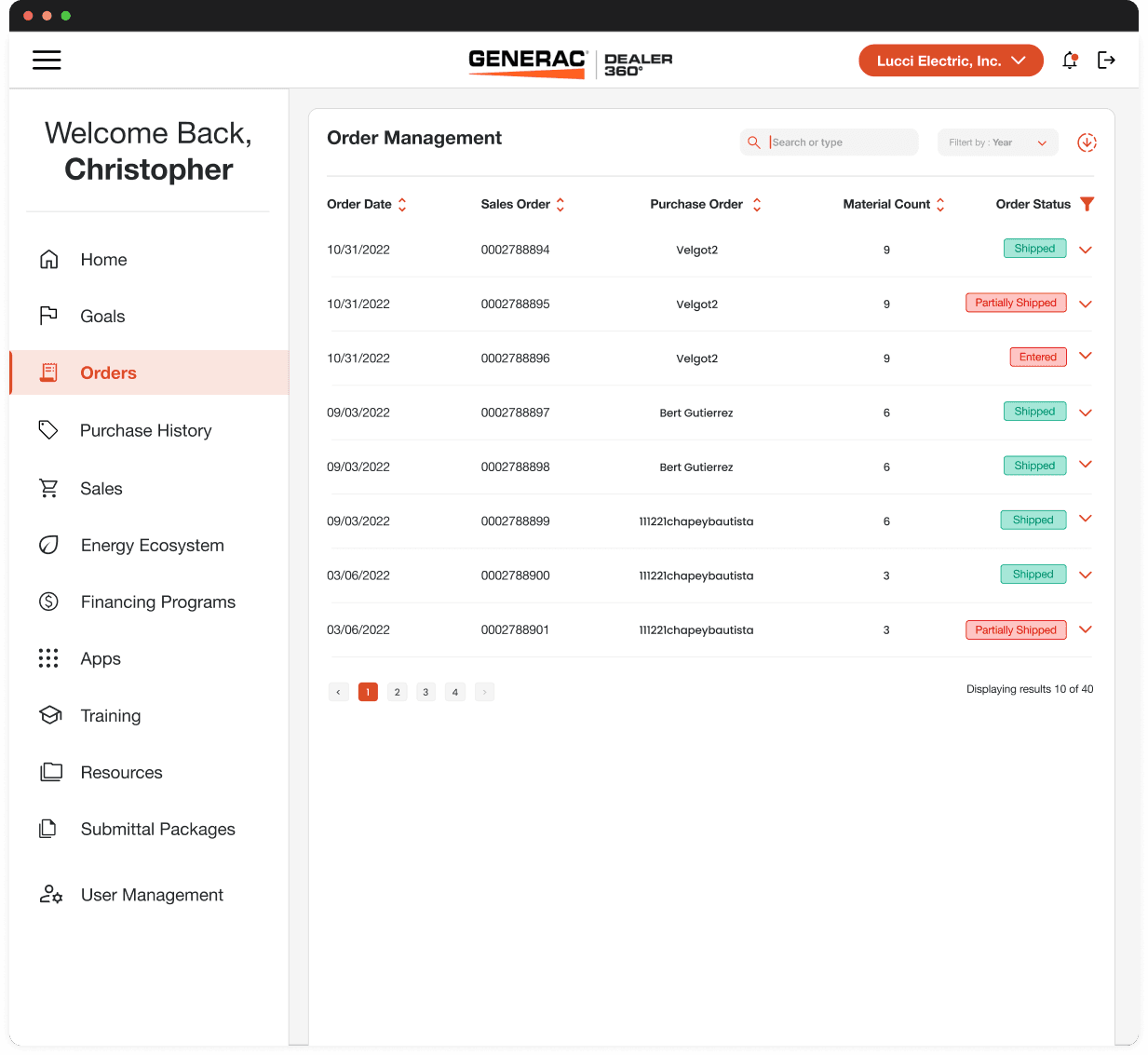
I audited existing flows and interviewed dealers across all 4 tiers to find where they were getting stuck. The information architecture was rebuilt around dealer tasks instead of internal org structure, then validated through moderated usability testing. A component system on an 8pt grid provided consistency and speed within backend constraints. I redesigned key flows for the dashboard, user management, order management, and purchase history. Every round of usability testing ran across tiers. I iterated on navigation, forms, and CTA placement based on data and what dealers told me. The hardest part was making one system feel tailored to each tier without ever touching what powered it underneath.




BUSINESS IMPACT
The result was more than a redesign. It was a shift in how dealers experienced the platform, from a system built around internal org structure to one built around what they actually needed to get things done.
Task completion rose 40% across core workflows like account setup and order management. Drop-off during key flows fell 35% after the navigation restructure and CTA redesign. The new design system introduced 50+ reusable components, reducing handoff friction between design and engineering, and setting the team up to move faster going forward.
DISCOVER MORE


